Sales Hotline : +65 6749 1911
Services Hotline : +65 8298 5030
Sales Hotline : +65 6749 1911
Services Hotline : +65 8298 5030
Every warehouse manager faces an important choice when setting up storage space. The decision between different storage systems affects daily operations, safety, and future growth. Many businesses wonder which option best suits their specific needs. The answer depends on what you store, how you move goods, and the available floor space. Two main options dominate the market: pallet racking and shelving. Each serves a distinct purpose in warehouse storage.
Understanding the key differences helps you make an informed decision. Pallet racking stores heavy loads on pallets using forklifts. Shelving is designed for smaller items that staff pick by hand. Choosing the right system improves efficiency and saves money over time. This guide explains both solutions clearly. It outlines their strengths and ideal applications. By the end, you will know which option best suits your operation.
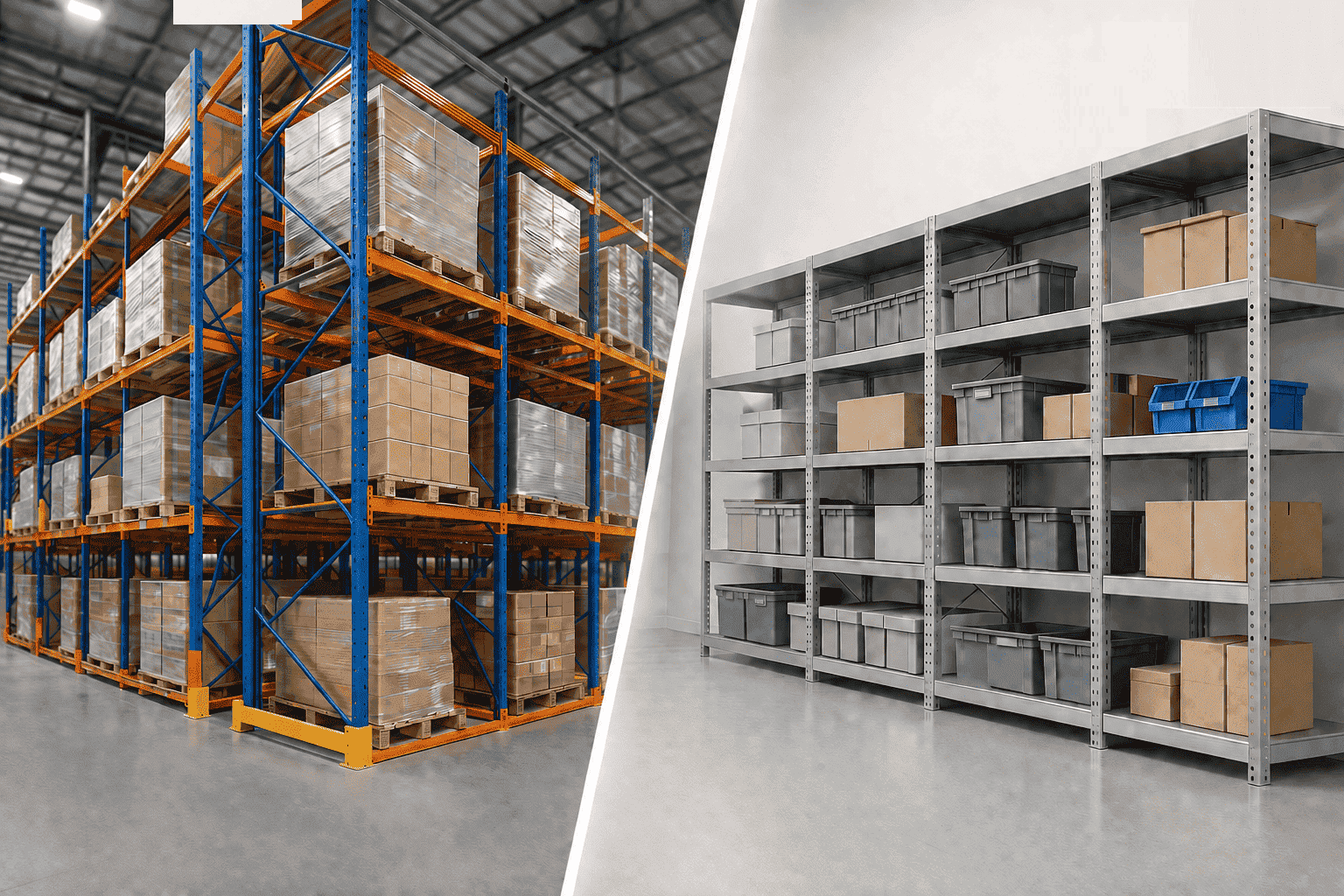
Pallet racking is a tall, robust storage system designed for heavy goods. It uses upright frames and horizontal beams to support palletised loads. Forklifts place and retrieve items from the racks. This system makes efficient use of vertical space in large warehouses. It is ideal for storing bulk quantities of uniform products. The steel construction provides long-lasting durability in demanding environments.
This system supports very heavy loads on each beam level. It can reach impressive heights while maintaining stability. The strong steel frames safely support thousands of kilograms. This makes it ideal for industrial facilities with high stock volumes. The design accommodates large quantities of palletised goods efficiently.
Forklifts are essential for handling goods within this system. They lift and position pallets onto the beams quickly. This significantly speeds up loading and unloading operations. It also reduces the need for manual handling of heavy items. Workers remain safer when machinery performs the heavy lifting.
Pallet racking makes full use of a warehouse's vertical height. This creates additional storage without increasing the building footprint. Higher racks accommodate more inventory within the same floor area. This provides a cost-effective way to expand storage capacity. It is ideal for businesses with limited floor space.
Shelving is a versatile storage solution for smaller, lighter items. It consists of upright posts with flat shelves between them. Staff can easily access products without specialised equipment. This system is commonly used in stockrooms and retail environments. It provides excellent flexibility for organising a wide range of goods. Its simple design makes everyday use straightforward and efficient.
Shelving is designed to store items that are not placed on pallets. It accommodates boxes, parts, tools, and packaged goods. Each shelf can hold different types of products, making organisation simple and efficient. Picking items is quick and requires very little training.
Staff pick products directly from the shelves by hand. This removes the need for forklifts in these areas. It creates a quieter and safer working environment for employees. Manual access also allows for the careful handling of fragile goods. In addition, it supports fast order picking for smaller quantities every day.
Shelving units are easy to reconfigure as business needs change. You can adjust shelf heights or relocate entire units with ease. This flexibility is beneficial when stock types or volumes vary. It enables quick adaptation without significant costs. Businesses can reorganise storage areas without requiring specialist tools or assistance.
Several factors to distinguish these two storage systems. Load capacity and access methods are among the main differences. The type of inventory you manage also influences the right choice. Below is a clear comparison of their key features.
| Feature | Pallet Racking | Shelving |
| Load Weight | Very heavy, over 5000 lbs per level | Light to medium, up to 2000 lbs per shelf |
| Access Method | Forklifts and machinery | Manual handling by staff |
| Item Type | Palletised bulk goods | Individual boxes and small parts |
| Height Capacity | Very tall, often over 40 feet | Usually under 10 feet |
| Space Use | Maximises vertical space | Uses more horizontal floor area |
| Flexibility | Less adjustable once installed | Highly adjustable and easy to relocate |
The right choice depends on your daily operations and storage requirements. Consider what you store most frequently. Think about how your staff move goods safely throughout the facility. Evaluate both your available floor space and vertical height carefully. The following suggestions can help guide your decision.
This simple guide helps you identify the most suitable solution quickly. Each system performs best in specific applications. Matching your operational needs to the appropriate system saves money while improving productivity. It also enhances daily workflow and workplace safety. Take time to assess your storage requirements carefully before making a decision.
Many warehouses benefit from combining both storage systems. Pallet racking stores bulk pallets in the main warehouse area, while shelving is used for smaller items in nearby picking zones. This creates a smooth workflow from storage to dispatch and combines the strength of pallet racking with the flexibility of shelving.
This combined approach works particularly well for growing businesses. It supports both bulk storage and individual item picking efficiently. The two systems complement each other in daily operations. Many successful warehouses rely on this method because it combines the advantages of both storage solutions.
The shelves may begin to bend under excessive weight before eventually failing. This creates a hazardous working environment that puts employees at risk of injury. Always check the weight capacity of each shelf before placing heavy items on any shelving system to ensure safe and reliable storage.
Pallet racking is generally unsuitable for use without forklifts. The racks are often too tall for workers to access safely by hand. Relying on ladders to reach stored goods increases the risk of falls and workplace accidents. Using the appropriate equipment helps maintain both safety and operational efficiency.
Every storage system has a specified Uniformly Distributed Load (UDL) rating. This indicates the maximum weight that each shelf or beam can safely support. Always follow the manufacturer's guidelines to prevent accidents, property damage, and personal injury.
Switching from shelving to pallet racking requires an initial investment in new equipment. Businesses may also need to train staff to operate forklifts safely. Although the upfront costs can be significant, many growing businesses find the long-term benefits outweigh the initial investment. Always ensure storage systems operate within their recommended load limits.